I came across this topic a few times before across social media.
It become quite known now and many clinics have started to offer this treatment.
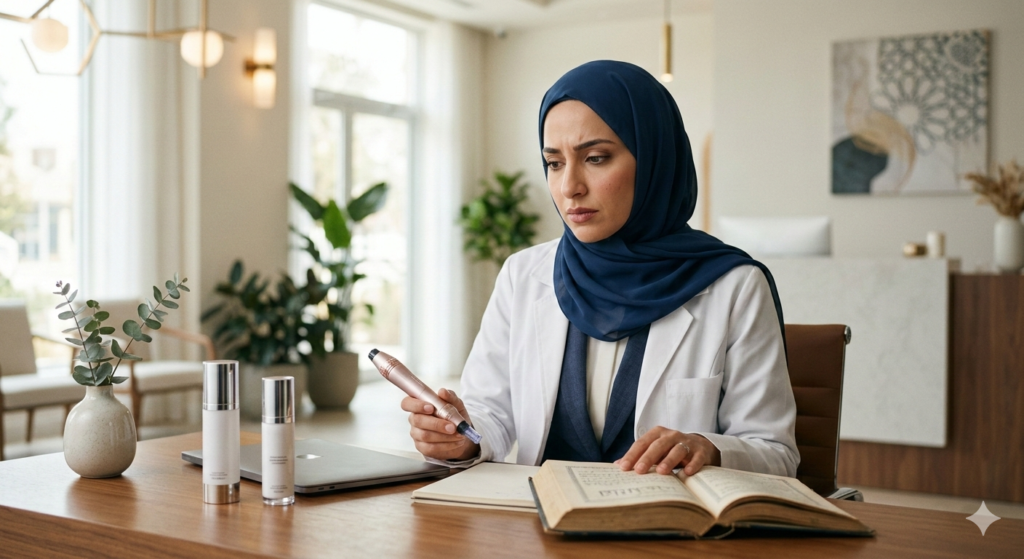
Once, one of my patient looked more nervous about asking the question than about the treatment itself. “Doctor,” she said quietly, “I want to know if this is even okay for me to do — as a Muslim.”
If you’ve ever typed a treatment name into Google followed by the word “halal” — you already know exactly how she felt.
The Question You’re Too Embarrassed to Ask Out Loud
Intimate health treatments are already difficult to talk about openly. Add the layer of Islamic permissibility on top, and most women just stay silent and stay stuck.
You might have heard about laser vaginal tightening from a friend, a clinic advertisement, or while quietly researching changes you’ve noticed in your body after childbirth or as you’ve gotten older. And almost immediately, two questions probably came up: Does this actually work? And: Is this something I’m even allowed to do? Both are completely valid questions. Neither gets answered properly in most places — which is exactly why this post exists.
The discomfort of not knowing is real. But so is the relief of finally understanding clinically and within an Islamic framework — where this treatment stands.
What Is Laser Vaginal Tightening, Clinically Speaking?
Laser vaginal tightening is a non-surgical medical procedure designed to address laxity — looseness — in the vaginal walls. It works by delivering controlled laser energy into the vaginal tissue, which stimulates the body’s own collagen production and promotes tissue remodelling. Think of it as encouraging your body to rebuild and firm tissue from the inside, without cutting or stitching anything.
The procedure is typically done over a series of sessions — usually three — and results can last more than 12 months. In Malaysia, the average cost is around RM2,500 per session. The treatment is performed by a licensed doctor, is minimally invasive, and involves little to no downtime. It’s NOT a beauty salon treatment — it’s a clinical procedure that targets actual physiological changes in tissue structure.
The causes of vaginal laxity are well-documented medically: repeated pregnancies and vaginal deliveries, the natural ageing process, hormonal changes, genetic factors, pelvic trauma, and physically demanding work. These are not cosmetic concerns a woman invented — they are real physiological changes with real effects on daily life, including urinary leakage, reduced sensation, discomfort, and in some cases, significant psychological distress. Understanding this clinical context is important before we can think about the Islamic dimension clearly.
What Does Islam Say? The Mufti’s Ruling Explained
This isn’t an area where we’re left guessing — there is direct scholarly guidance available.
Irsyad Hukum Siri ke-816, issued by Jabatan Mufti Wilayah Persekutuan, addresses laser vaginal tightening specifically. The ruling draws on the Quranic principle in Surah Al-Rum (30:30), which instructs us to remain on the fitrah — the natural creation of Allah SWT and not to alter it without justified reason. It also references the hadith narrated in Sahih Muslim (no. 2125), in which the Prophet ﷺ warned against changing Allah’s creation purely for beauty purposes.
But and this is crucial — Imam al-Nawawi clarifies that this prohibition applies specifically to changes made purely for cosmetic purposes. When a procedure is done for treatment, to address a genuine medical condition, or to restore original function that has been affected by illness or injury, the ruling shifts. The Mufti’s position is clear and balanced:
Permissible (Harus): if the treatment is done for a genuine medical need — such as restoring function that has been affected by childbirth trauma, pelvic injury, or a medical condition. Women are advised to prioritise Muslim female doctors where possible.
Not Permissible (Haram): if the treatment is done purely for cosmetic purposes or solely to enhance sexual pleasure without any underlying medical reason. Natural changes that come with ageing and childbirth are part of how Allah created the human body — altering them without genuine necessity is considered changing Allah’s creation. The ruling also notes that this procedure requires exposure of sensitive private areas (aurat), which without clear medical necessity opens the door to significant concern.
The Mufti’s bottom line: intention is the primary determining factor. Medical treatment — permissible. Purely cosmetic enhancement — not permissible.
The Honest Reflection — When Does “I Need This” Become “I Want This”?
This is where it gets nuanced and where I want to be honest with you rather than overly simple.
The line between medical need and cosmetic desire isn’t always a clean one, and I think it’s important to acknowledge that. A woman who experiences urinary leakage, chronic discomfort, or real psychological distress after multiple deliveries has a very different situation from a woman who simply wants things to feel different for cosmetic reasons. Both women deserve to be heard — but their clinical and Islamic considerations are different. As a doctor, my job is to help you understand that distinction honestly, not to rubber-stamp every request. And as a Muslim woman making this decision, your job is to sit with your own intention honestly — not just tell yourself what you want to hear.
The Prophet ﷺ reminded us that “actions are by intentions.” That applies here. If your reason is genuine — if there is real functional impact, real discomfort, real medical basis — that changes the Islamic consideration significantly according to the Mufti’s guidance. If it’s purely about aesthetics or enhancement without any clinical need, the ruling is clear. Only you and Allah know which category you’re truly in. A good doctor will help you figure that out through a proper consultation, not just take your money and proceed.
Before You Book — Questions Worth Asking Yourself
Before you make any decision about this treatment, here are the questions I’d encourage you to sit with honestly.
Is there a genuine medical reason behind your interest in this treatment — functional changes, discomfort, urinary issues, or documented pelvic floor impact? Or is the motivation primarily cosmetic? Have you spoken to a doctor — ideally a Muslim female doctor — about a proper assessment of whether this treatment is clinically appropriate for your specific situation? And have you consulted a qualified Islamic scholar about your personal circumstances, rather than relying only on a general ruling?
None of these questions are meant to make you feel guilty for considering the treatment. They’re meant to help you make a decision you feel genuinely settled about — not one you second-guess for years afterward.
A Gentle Closing
Your body has been through a lot. Pregnancy, delivery, the demands of daily life — and the quiet changes that come with all of it that no one really talks about. It makes complete sense that you’d want to understand your options.
What I hope this post gives you is clarity, not confusion. Clarity that this treatment exists, that it’s a real medical procedure with clinical evidence behind it. Clarity that Islam does not give a blanket prohibition but also does not give a blanket permission. And clarity that the most important thing you can do before making any decision is understand your own situation honestly, consult a doctor properly, and bring your questions to qualified scholars who can guide you with knowledge and care.
You deserve accurate information. You deserve a doctor who takes your values seriously. And you deserve to make this decision from a place of knowledge — not fear, not guilt, and not blind trust in a clinic that just wants to sell you a package.
This post is written from a clinical and educational perspective based on published scholarly rulings from Jabatan Mufti Wilayah Persekutuan (Irsyad Hukum Siri ke-816). It does not constitute a fatwa or personal religious ruling.
For religious rulings specific to your personal circumstances, please consult qualified Islamic scholars.